

Medieval hairstyles are having a genuine cultural moment right now and it makes complete sense. Between the explosion of fantasy media, historical drama series, cosplay culture, and the growing interest in period-accurate fashion on social media, historical hairstyles medieval women wore have never been more searched, pinned, and recreated than they are today.
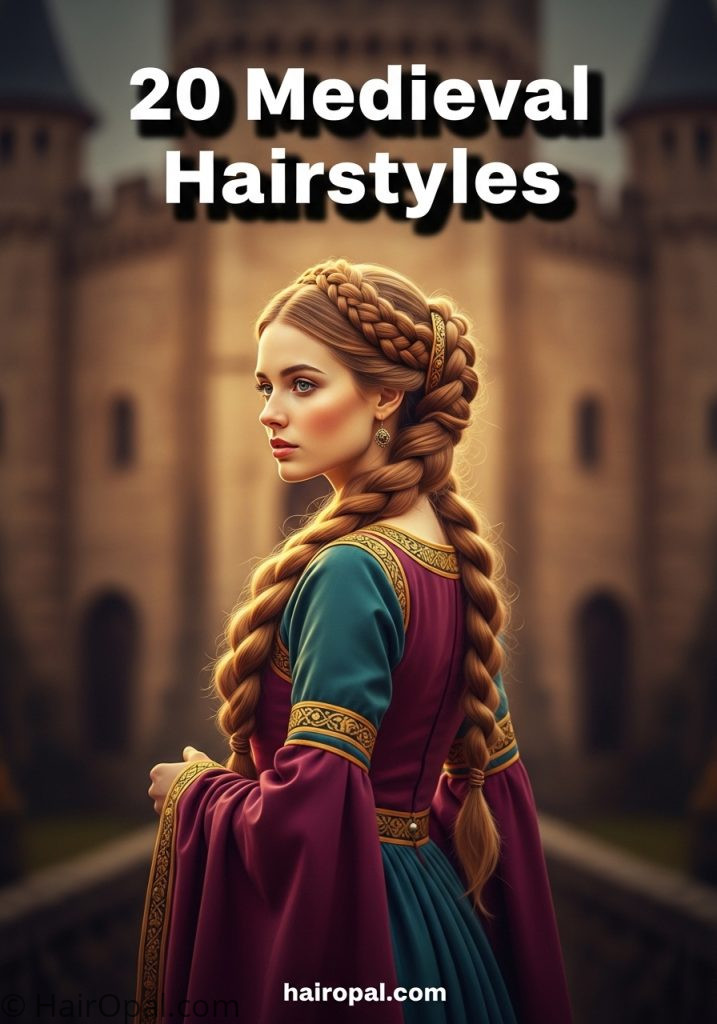
What makes medieval hair so fascinating is how much variety actually existed within the era. The Middle Ages spanned roughly a thousand years and the hairstyles changed significantly across different centuries, regions, and social classes. A peasant woman in 12th century France wore her hair very differently from a noblewoman in 15th century England. Braids, veils, wimples, horned hennins, fillet headbands, loose flowing hair for unmarried women, and completely covered hair for married women — the range is remarkable and genuinely beautiful.
These are 20 historical hairstyles medieval women actually wore, each grounded in what we know from medieval art, manuscripts, and historical records, alongside practical guidance for recreating them today.
1. The Medieval Two-Braid Style
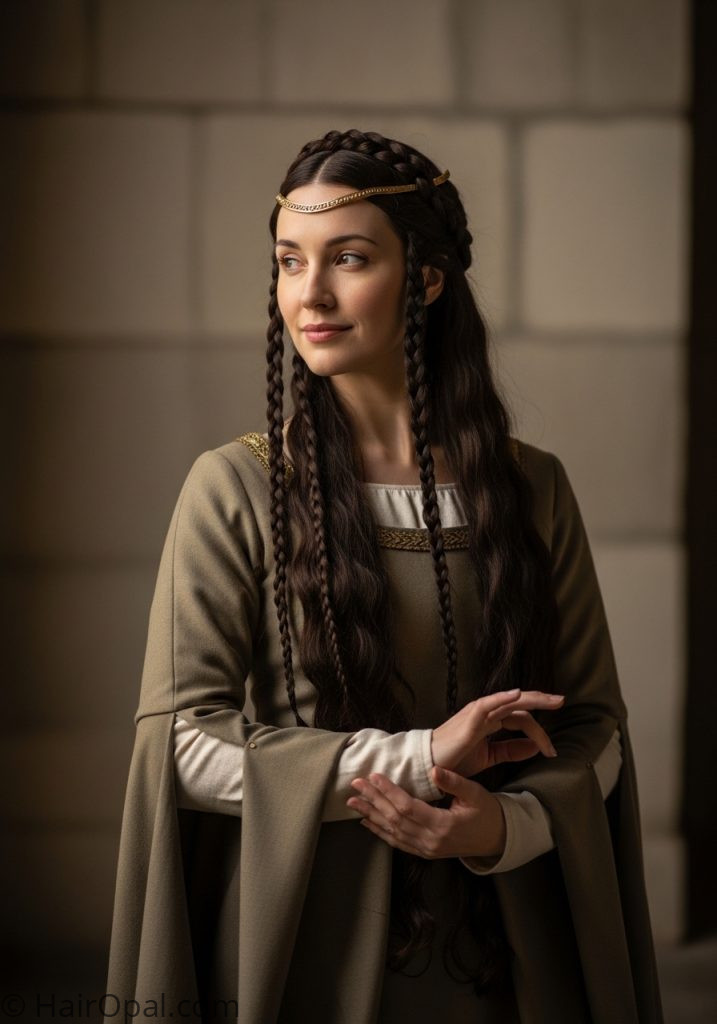
The two-braid style is one of the most universally recognized historical hairstyles medieval women wore across multiple centuries. Long hair was divided from a center part, braided into two thick plaits starting at the temples, and allowed to hang down past the shoulders often wrapped in decorative fabric called silken crespines in wealthier households.
This is one of the most accessible historical hairstyles medieval tutorial options because the basic two-braid technique requires no special skills and the medieval character comes entirely from the styling details — a simple fabric headband or golden fillet across the crown, the clean center part, and the deliberate thickness of each braid. For braid technique foundations, our braids hairstyles guide covers everything worth knowing before attempting period-style braiding.
2. The Fillet and Veil Combination
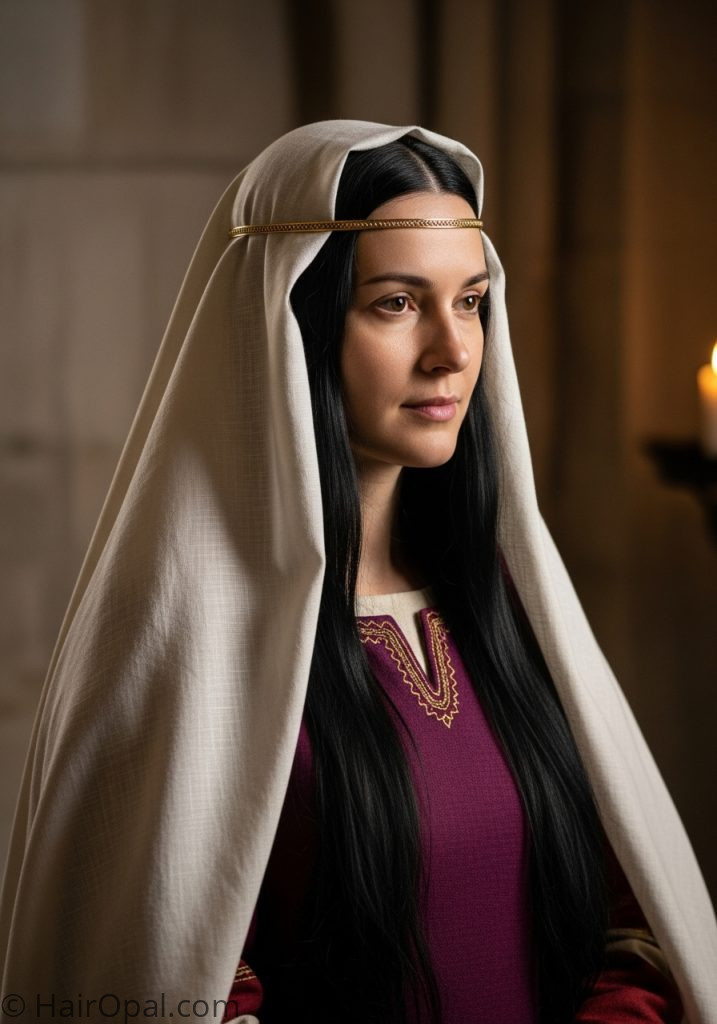
A white linen veil held in place by a slim fillet headband was one of the most common historical hairstyles medieval married women of all social classes wore for most of the medieval period. The hair underneath was typically braided or pinned flat against the head before the veil was draped over it, with the fillet sitting across the forehead to keep everything secure.
This style appears repeatedly in medieval art across illuminated manuscripts and painted altar pieces and is one of the most period-accurate historical hairstyles medieval art depicts with consistency. It is also one of the easiest to recreate — a white or cream linen cloth draped over pinned hair and secured with a thin headband or ribbon is all that is needed.
3. Braided Crown Updo
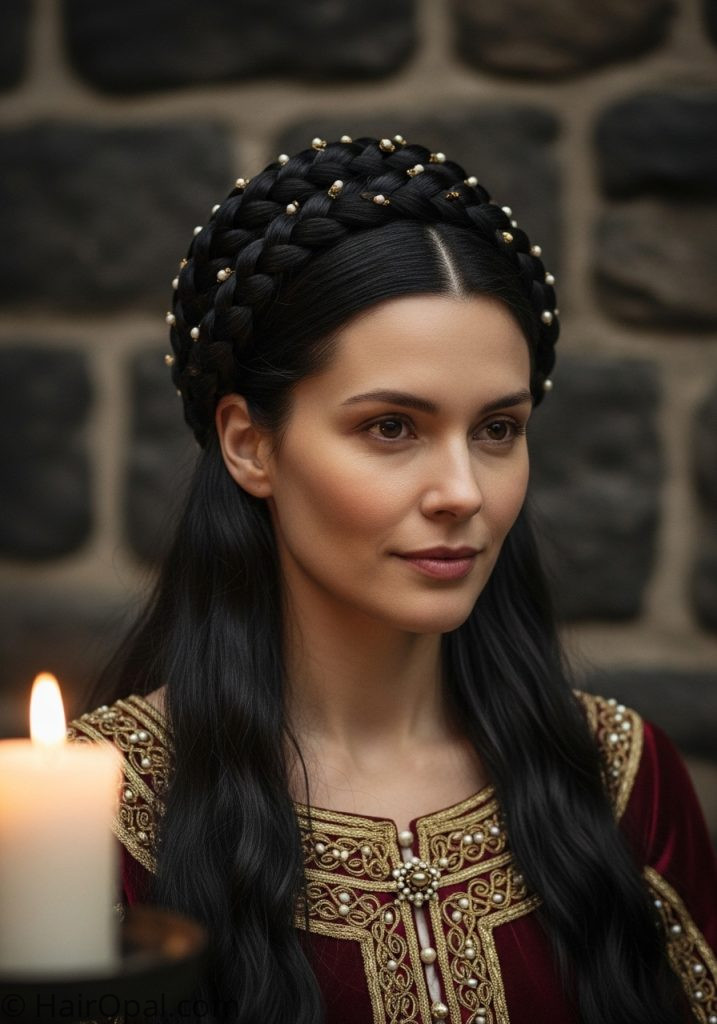
The braided crown was a widely worn updo style across the medieval period, appearing in manuscript illuminations from the 12th century onward especially among noblewomen. The hair was braided in sections around the perimeter of the head and pinned into a crown shape that sat elegantly above the hairline.
This is one of the most beautiful historical hairstyles medieval easy tutorial options for modern recreation because the braided crown technique is achievable with basic braid skill and bobby pins. For more braided crown techniques, our updo hairstyles guide has relevant styles worth building on.
4. The Hennin Cone Style
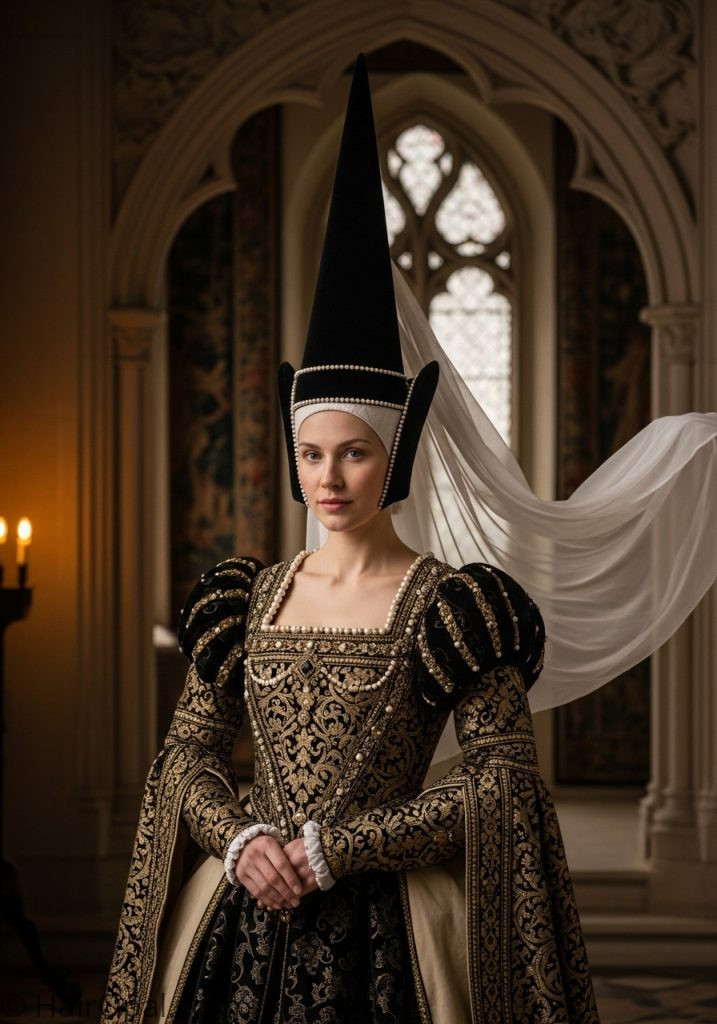
The hennin is perhaps the most visually dramatic of all historical hairstyles medieval art from the 15th century depicts. This tall pointed cone headdress, often covered in velvet or rich fabric with a sheer veil flowing from the tip, was worn by noblewomen in France, England, and Burgundy in the late medieval period. The hair was completely concealed beneath it, often with the forehead hairline plucked back to create an artificially high forehead fashionable in the era.
It is one of the most striking historical hairstyles medieval costume enthusiasts and cosplayers recreate for Renaissance fairs, historical events, and period-accurate photoshoots.
5. Loose Flowing Hair for Unmarried Women
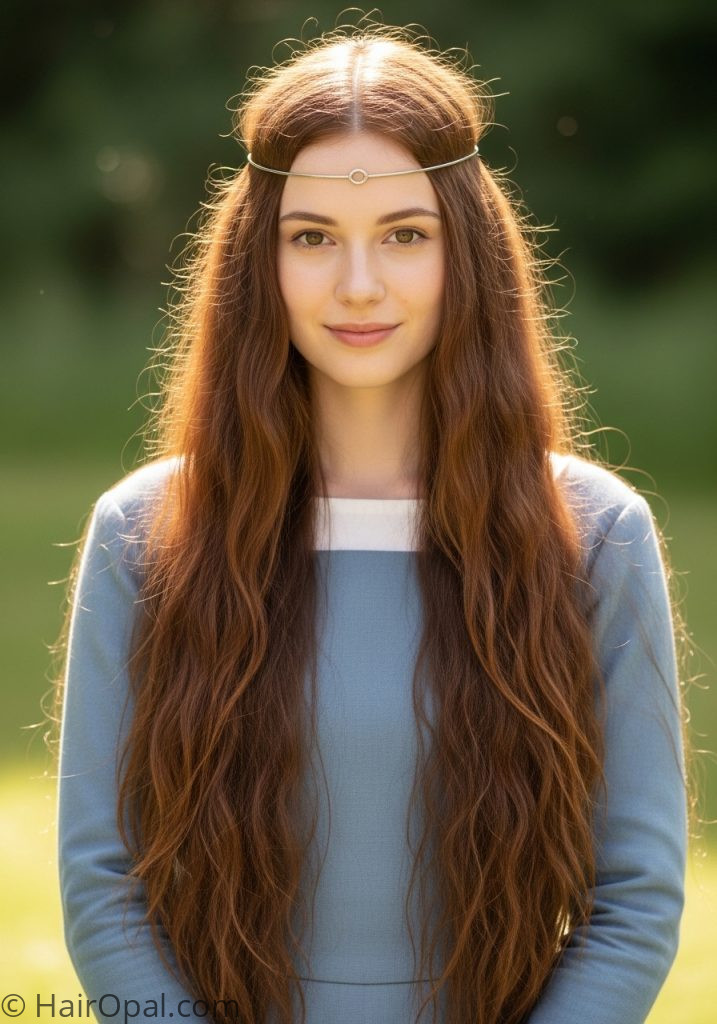
Loose flowing hair was one of the most symbolically significant historical hairstyles medieval women wore — but specifically unmarried young women and girls. In medieval Europe, loose unbound hair was the mark of maidenhood, which is why brides wore their hair down on their wedding day and married women were expected to cover or bind their hair afterward.
A simple thin circlet of metal or a flower crown placed across the forehead over loose flowing hair is the classic medieval maiden look that appears throughout medieval art and literature. It is also one of the most historical hairstyles medieval easy options to recreate today since it requires nothing more than leaving long hair loose and adding a simple headpiece.
6. The Wimple Style
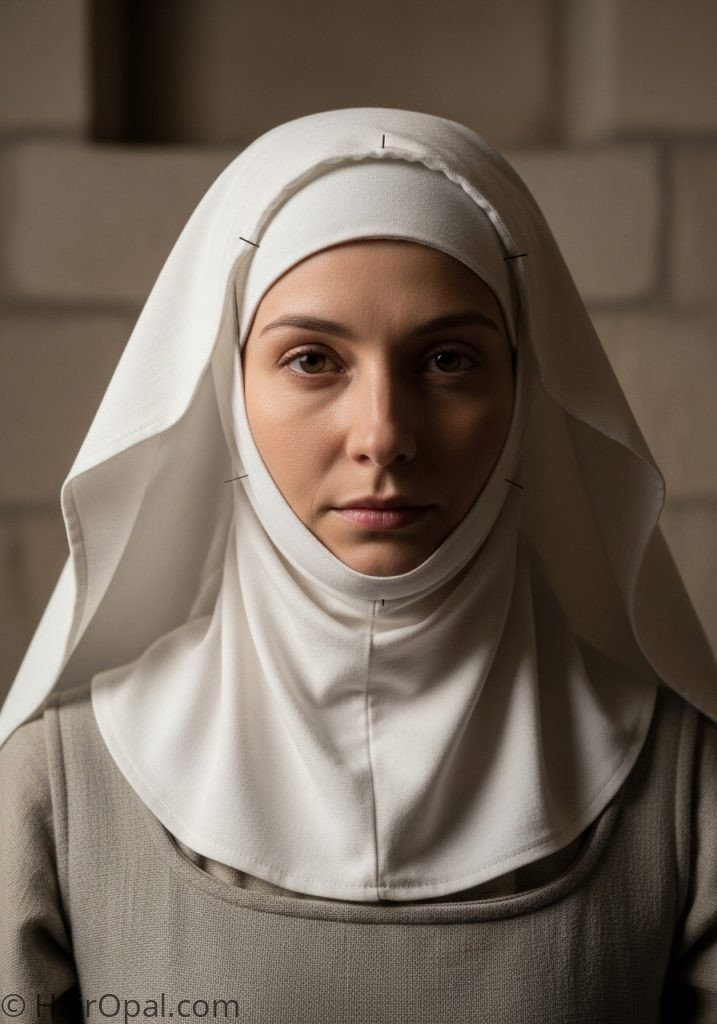
The wimple was a linen cloth wrapped around the head, neck, and under the chin that was one of the most practical and widely worn medieval hairstyles historical records confirm across all social classes from the 12th through 14th centuries. It completely concealed the hair and was often worn together with a veil draped over the top.
The wimple appears constantly in medieval art, illuminated manuscripts, and tomb effigies making it one of the most well-documented historical hairstyles medieval art has preserved. The hair beneath was typically braided and pinned flat to keep a smooth silhouette under the fabric.
7. Horned Headdress Style
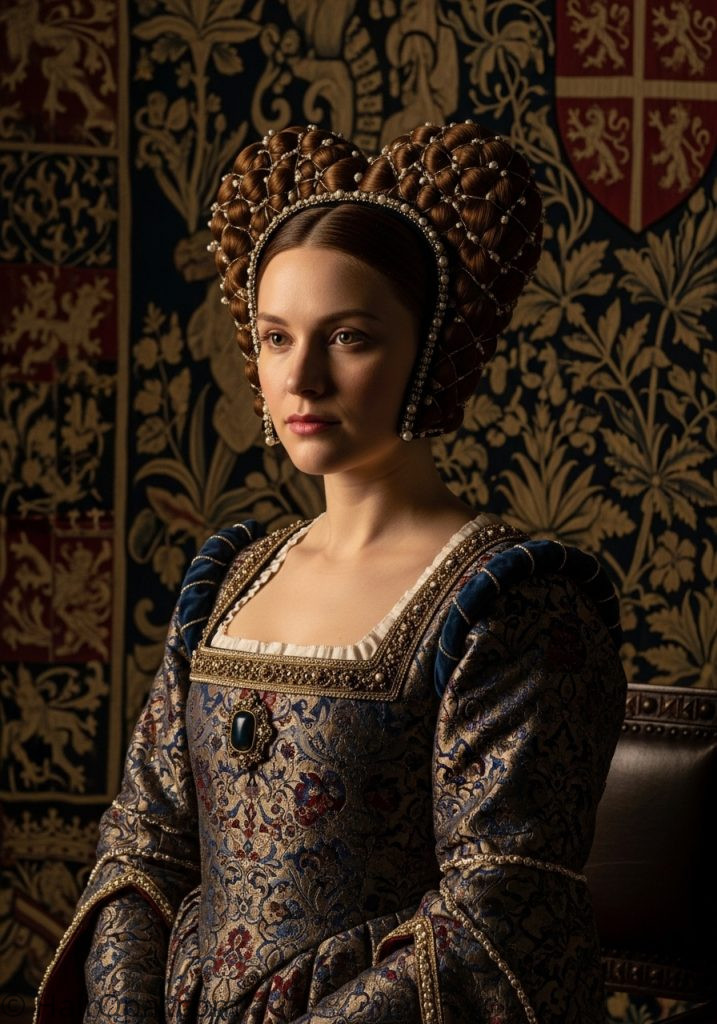
The horned or heart-shaped headdress was fashionable in late medieval England and France during the early 15th century and it is one of the most distinctive historical hairstyles medieval art from that period shows. The hair was rolled or padded at each side of the head to create symmetrical horns or lobes and then covered with decorative fabric or a caul net.
It appears in portraits of noblewomen from the early 1400s and is frequently depicted in medieval manuscript illuminations of the period. For cosplayers and Renaissance fair attendees this headdress is one of the most sought-after medieval looks to recreate.
8. Simple Medieval Braid with Ribbon
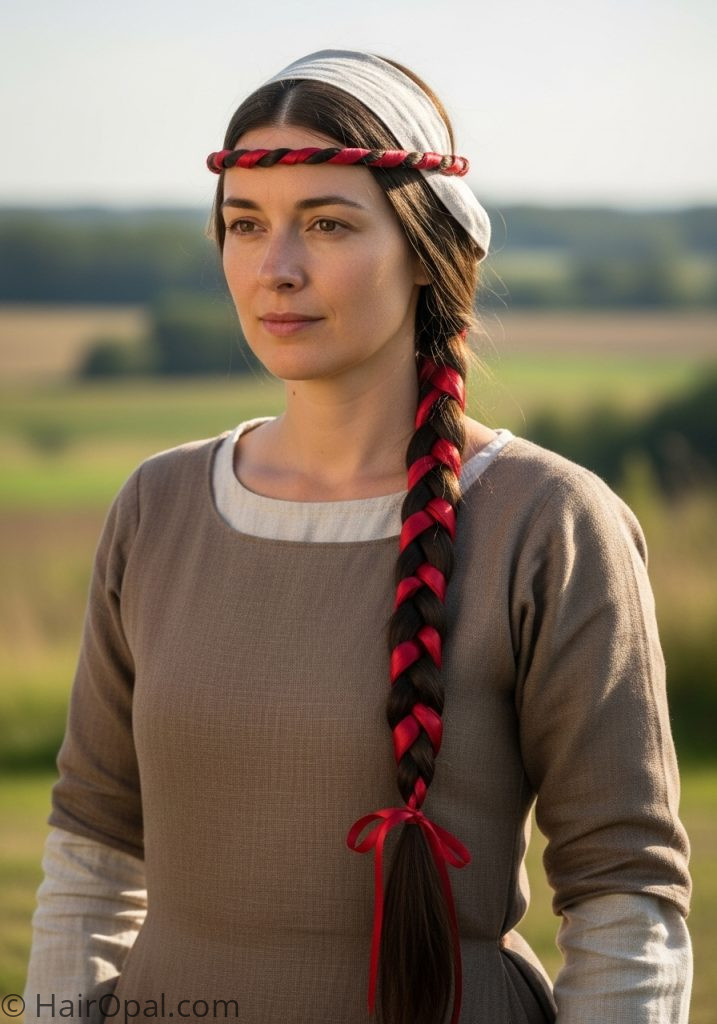
A single thick braid woven with a ribbon down the length was a practical and decorative medieval hairstyle worn by women across different social classes. The ribbon added color and ornamentation to what was fundamentally a utilitarian style — keeping long hair controlled during daily work and activities.
This is one of the most straightforward historical hairstyles medieval tutorial options because it requires only basic braiding skill and a ribbon. A red, blue, or gold ribbon woven through the braid sections gives it the most period-appropriate appearance based on colors frequently depicted in medieval illustrations.
9. Medieval Curly Hair with Caul Net
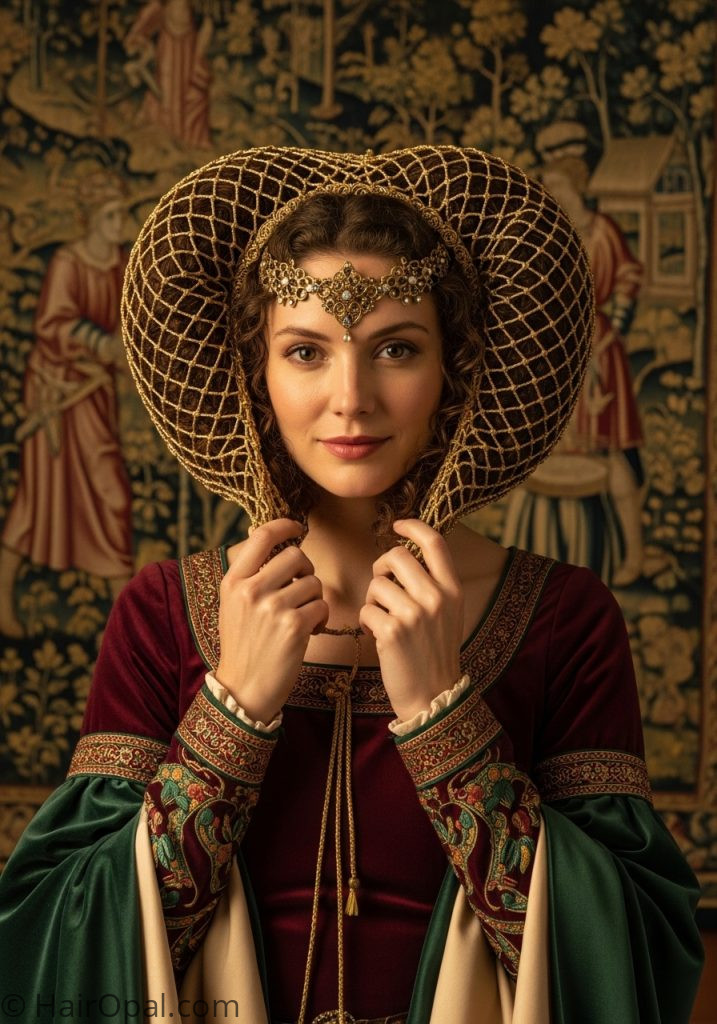
For women with naturally curly hair in the medieval period, the caul or crespine — a decorative net of woven silk or gold thread — was used to contain the hair at the sides of the head, holding it close to the face in a structured way. The curls were visible through the net which added beautiful texture to the overall look.
This is one of the most interesting historical hairstyles medieval curly hair wearers can recreate today because the caul net is sourceable from historical costume suppliers or handmade from fine netting material. The natural curls contained within the net and a decorative fillet headband creates a genuinely period-accurate medieval style. For more curly hair styling techniques, our curly hair hairstyles guide has great foundation skills worth developing.
10. Viking-Influenced Braided Updo
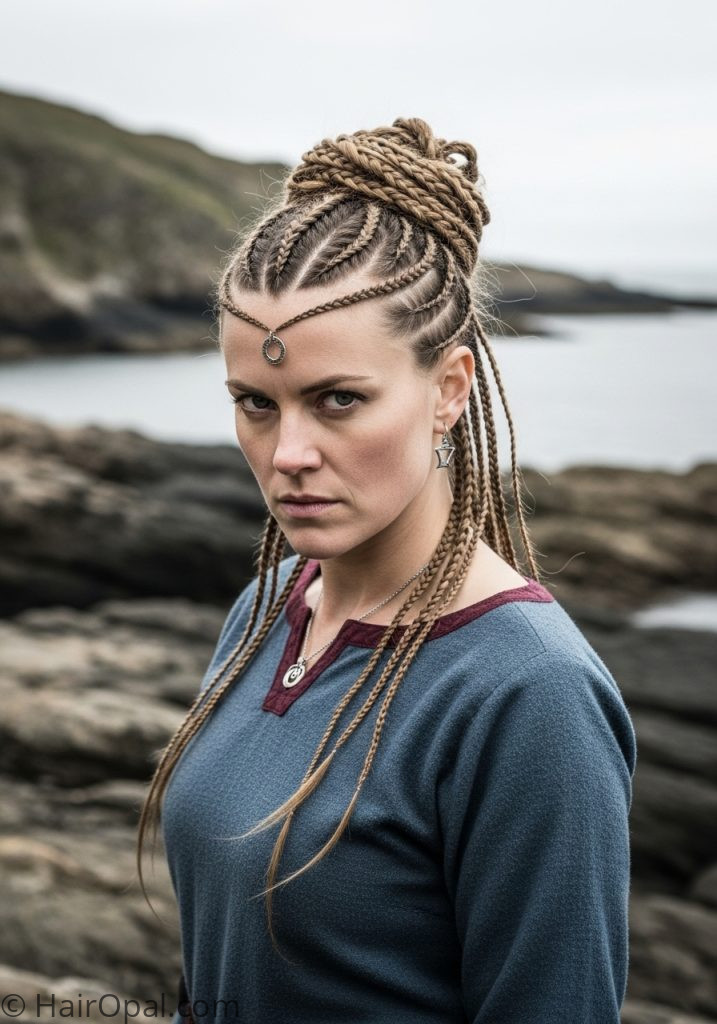
Early medieval hair traditions in Northern Europe, particularly among Norse and Viking communities, involved elaborate braiding that combined multiple thin braids gathered into complex updos or wrapped around the head. These styles are well-documented in archaeological finds and period artwork showing women with intricately braided hair that was both practical and decorative.
The Viking-influenced braided updo translates beautifully into modern recreation because complex multi-braid updos are a well-established modern hairstyle technique. The historical character comes from keeping the braids tight and deliberate with simple metalwork or woven headband accessories.
11. Short Hair Medieval Style with Coif
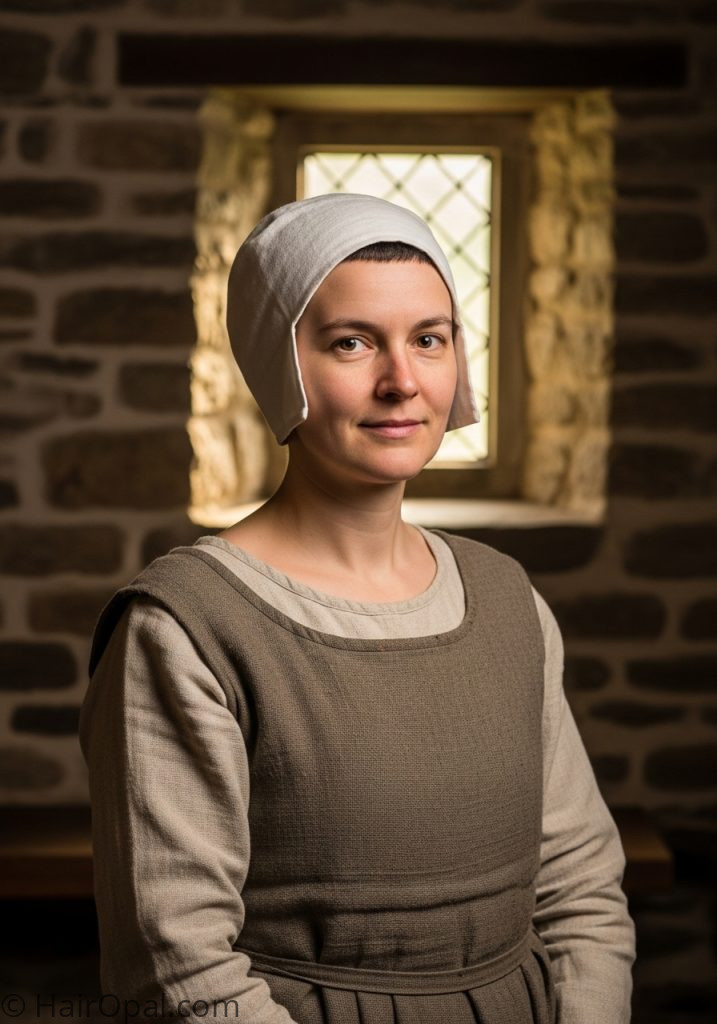
Short hair was not the norm for medieval women but it did exist, particularly among women in religious orders, those who had experienced illness, and working class women for whom long hair was impractical. The coif — a fitted linen cap that covered the hair completely and tied under the chin — was the most common way short hair was managed in the medieval period.
For modern recreation, the historical hairstyles medieval short hair aesthetic is best achieved with a fitted linen or cotton cap over short hair styled close to the head. This is one of the most achievable medieval looks for women with short hair because the headcovering does the historical work rather than the hair itself.
12. High Medieval Noble Updo with Jewels
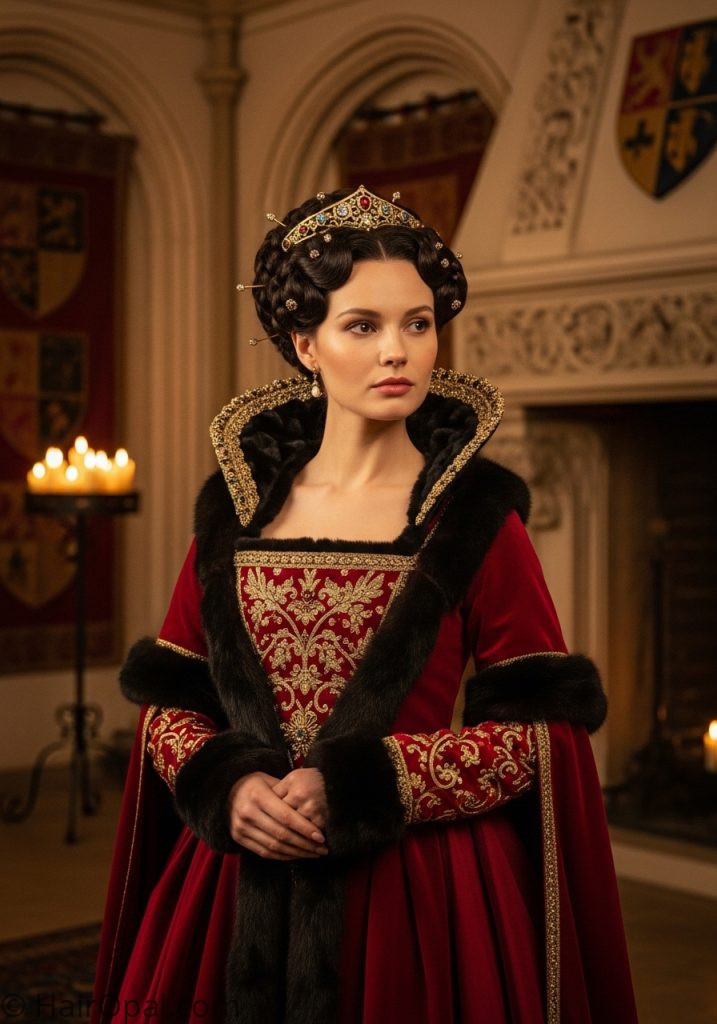
Wealthy noblewomen of the high medieval period wore their hair in elaborate pinned updos decorated with jeweled pins, golden fillets, and precious ornaments that demonstrated their family’s wealth and status. These styles required skilled ladies-in-waiting to arrange and were maintained throughout the day with the help of domestic staff.
The jeweled medieval updo translates beautifully into modern cosplay and historical photography because the visual language — swept-up dark hair, glinting golden accessories, an elaborate fitted gown — is immediately recognizable. Crystal or pearl pins in a modern updo combined with a thin gold headband creates a convincing contemporary interpretation.
13. The Crespine Style
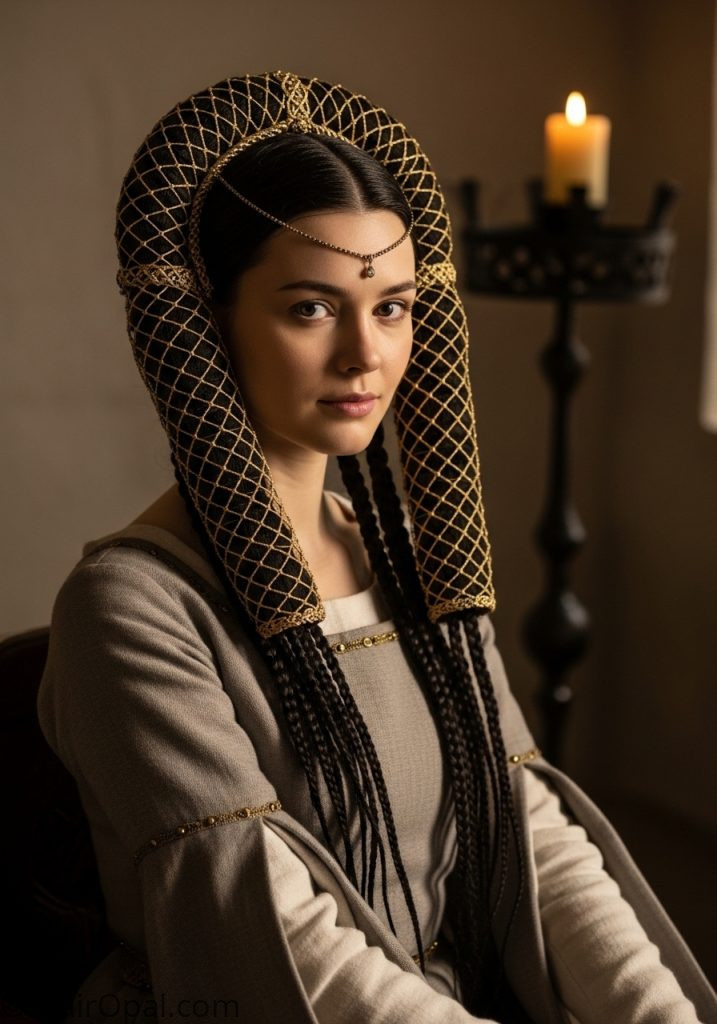
The crespine style involved coiling the braids or rolled hair into decorative pouches or nets sitting on either side of the head at the temples, connected by a fillet across the forehead. This style was fashionable across the 13th and 14th centuries and appears frequently in medieval art as one of the most characteristic looks of the high medieval period.
It is depicted in tomb effigies, manuscript illuminations, and painted panels across England, France, and Italy making it one of the best-documented historical hairstyles medieval art has preserved.
14. Medieval Maiden Flower Crown Style
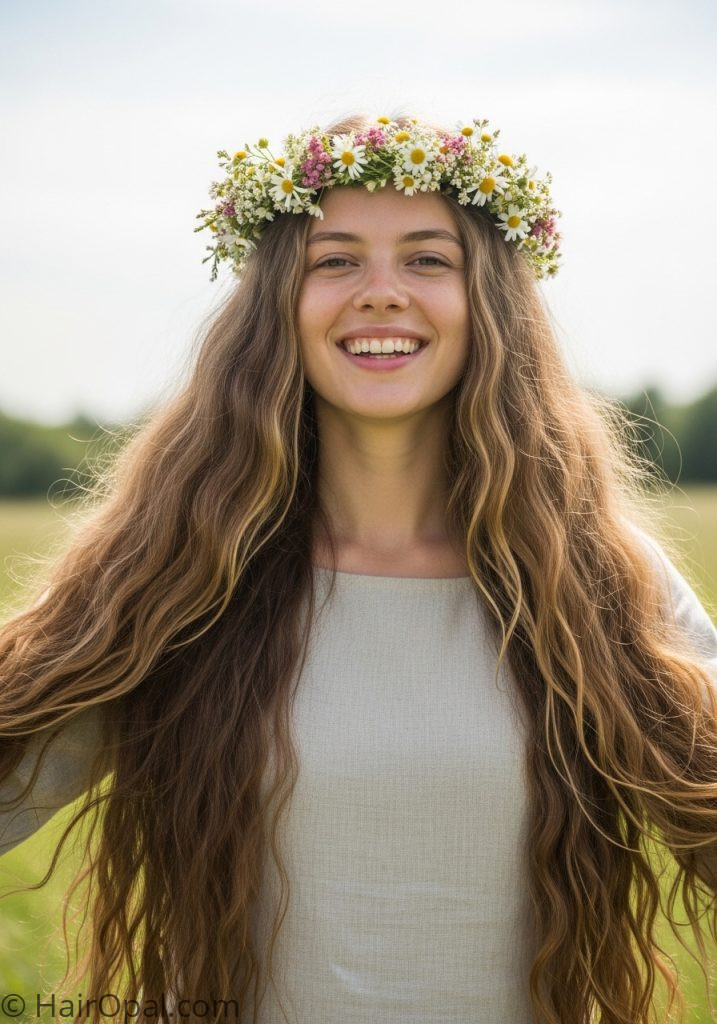
The flower crown on loose flowing hair is one of the most romantically beautiful historical hairstyles medieval women wore for festivals, May Day celebrations, and ceremonial occasions. Young unmarried women adorned their unbound loose hair with fresh seasonal flowers as part of seasonal celebrations that were an important part of medieval community life.
This is one of the most accessible historical hairstyles medieval easy options to recreate today because it requires only long loose hair and a simple flower crown.
15. Byzantine Court Style
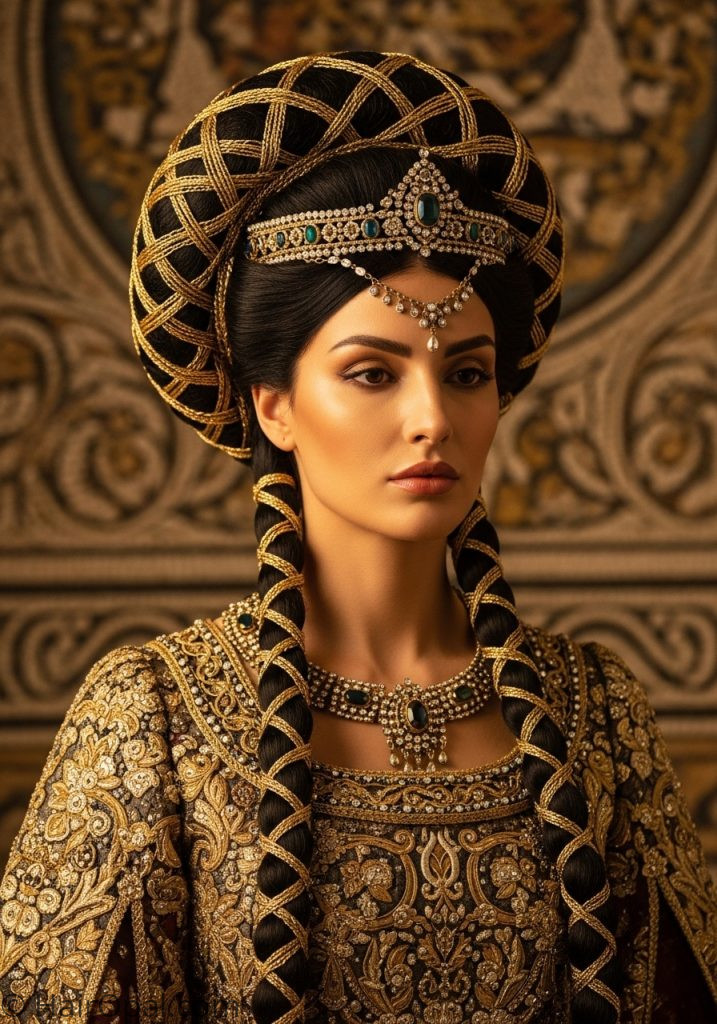
Byzantine court hairstyles from the early medieval period are some of the most elaborate and gilded styles the era produced. Gold thread woven through pinned hair, jeweled diadems, and heavily ornamented updos are depicted in Byzantine mosaics and icons from Constantinople and represent the Eastern strand of medieval hairstyle history that is often overlooked in Western-focused historical hair discussions.
The Byzantine style translates beautifully into historical costume photography and cosplay. Gold-threaded hair accessories, jeweled headbands, and richly decorated updos create the most authentic Byzantine aesthetic.
16. The Coiled Temple Loops
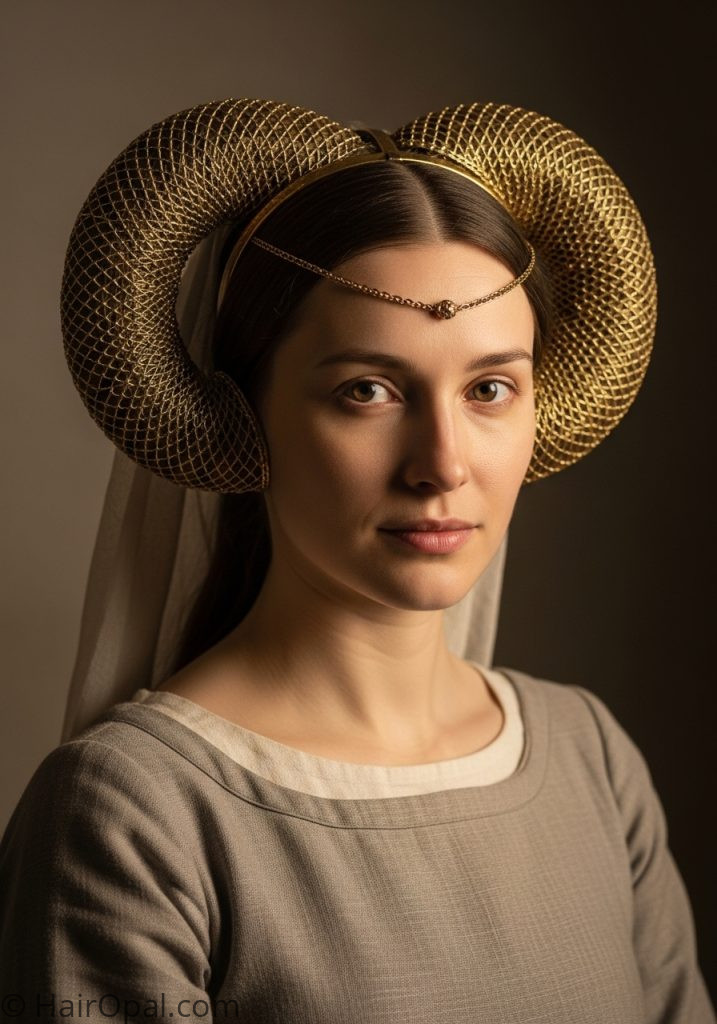
Coiled temple loops — where the hair was divided, wound into large circular coils sitting flat on either side of the head above the ears, and enclosed in decorative mesh or ribbon — were fashionable across the 12th and 13th centuries and appear in numerous illuminated manuscripts from the period.
They are one of the most distinctive historical hairstyles medieval art from that specific period depicts. The circular geometry of the coils against the sides of the head creates a visual signature that is unmistakably medieval in character and genuinely striking in modern recreation contexts.
17. Simple Peasant Braid Down
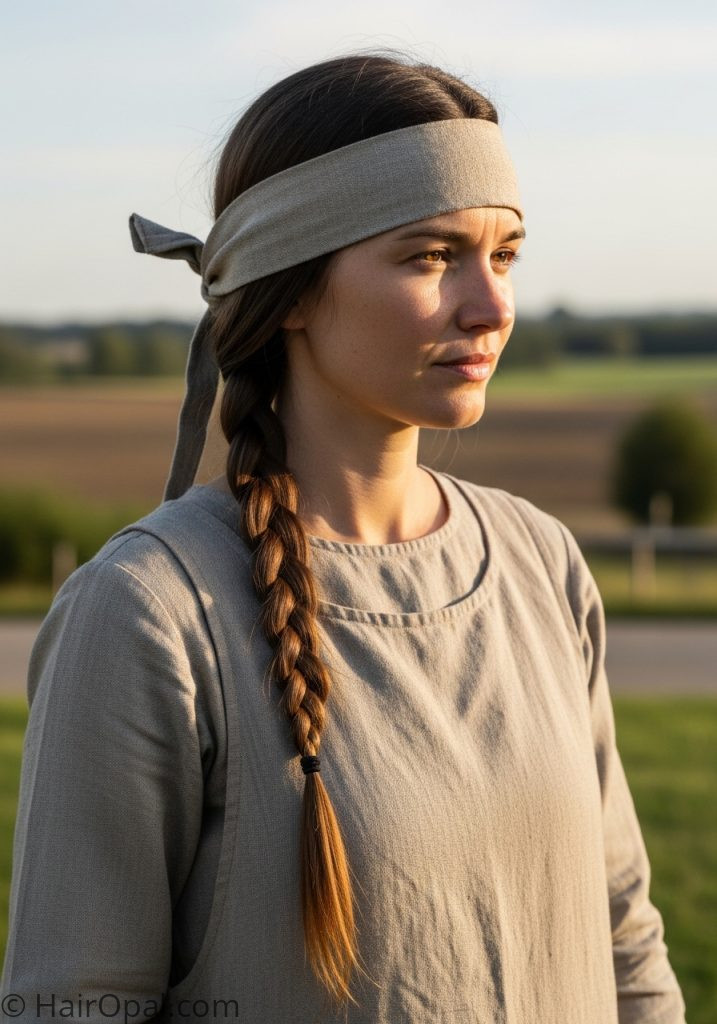
The simple single braid with a plain linen headband is the most historically accurate representation of how most medieval women — the peasant and working class majority — actually wore their hair on a daily basis. Not every medieval woman had access to jeweled nets or elaborate headdresses. A clean braid, a functional headband, and hair kept practical for a day of physical work was the everyday reality for most women of the era.
This is the most historically grounded of all historical hairstyles medieval easy options and the most straightforward to recreate.
18. Medieval Curly Hair Loose with Fillet
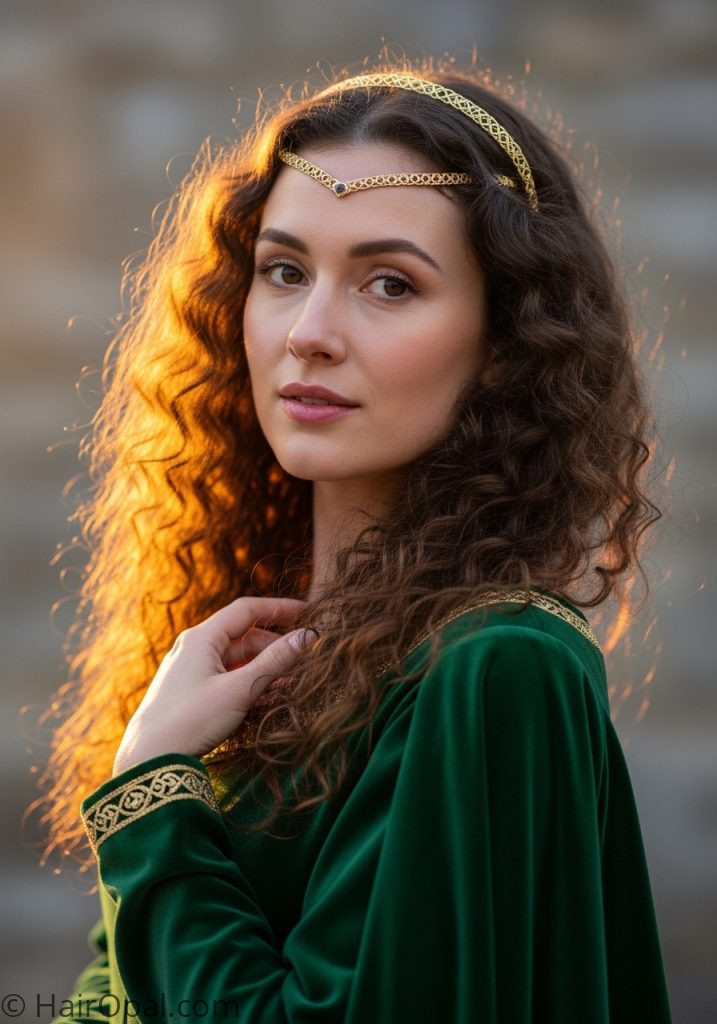
Naturally curly hair worn loose with a decorative fillet is one of the most beautiful historical hairstyles medieval curly hair wearers can adapt for modern recreation because the natural curl texture adds warmth and beauty to a style that would look significantly plainer on straight hair. A thin gold or silver fillet headband is the only addition needed.
This style appears in medieval art representing noblewomen, saints, and idealized feminine figures, suggesting that curly hair was considered beautiful and desirable in the medieval aesthetic.
19. The Medieval Half Up with Veil
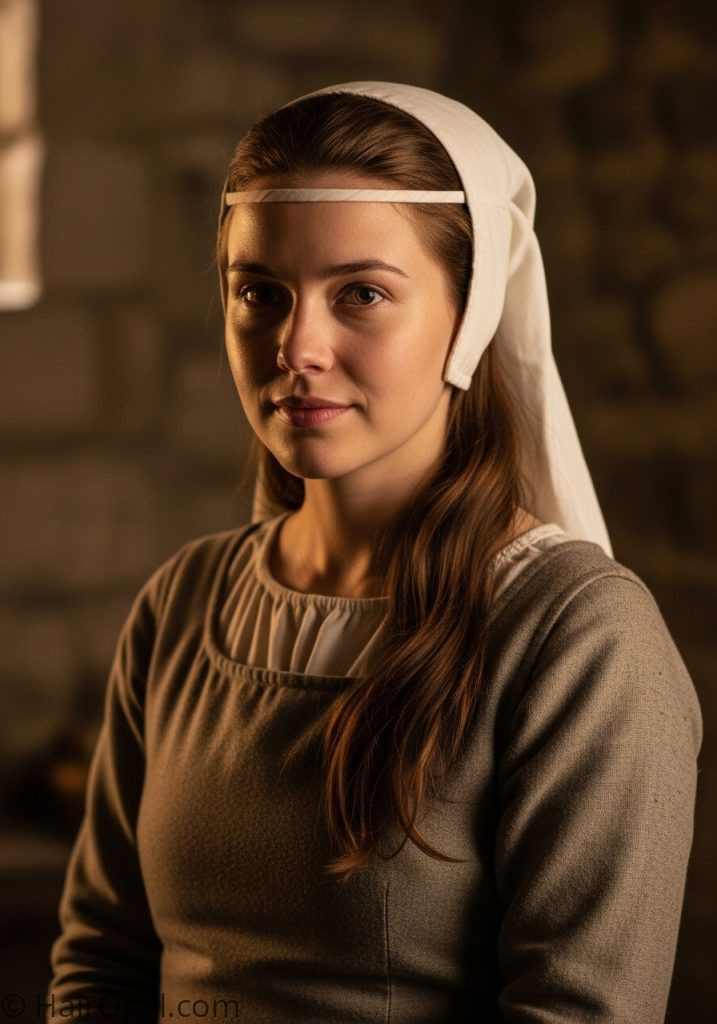
A half up style where the upper section of hair was covered with a small veil while the lower section was left loose or braided was a transitional medieval style appearing in medieval art across the 13th and 14th centuries particularly in depictions of middle-class townswomen.
This is one of the most wearable historical hairstyles medieval easy recreations for modern enthusiasts because it is both period-accurate and practically comfortable to wear for extended periods at historical events and Renaissance fairs.
20. Late Medieval Butterfly Headdress
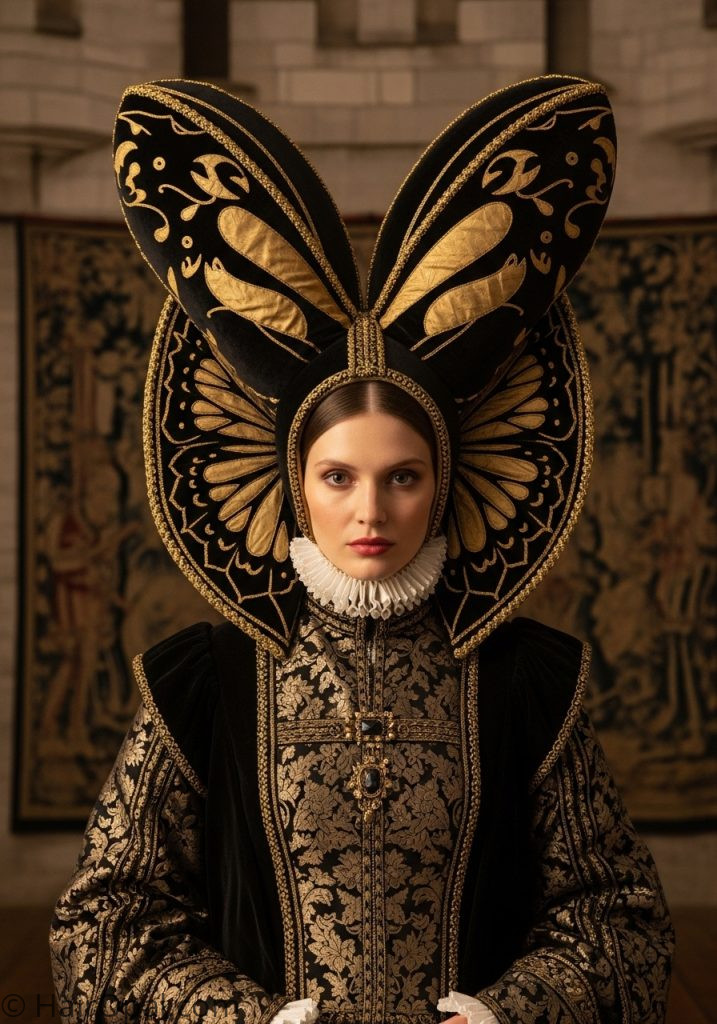
The butterfly or escoffion headdress of the late 15th century is one of the most architecturally dramatic historical hairstyles medieval court fashion produced. Two large padded lobes rise dramatically above the head covered in rich velvet or brocade, sometimes wired to achieve maximum height and width. The hair was completely concealed beneath this elaborate construction.
It appears in portraits of European noblewomen from the 1470s through the 1490s and represents the peak of late medieval headdress excess before Renaissance fashion moved toward entirely different aesthetic values.
Final Thoughts
Historical hairstyles medieval women wore tell a rich story about social class, marital status, religious values, and regional fashion trends across a thousand years of European history. From the simple peasant braid to the towering hennin, from loose maiden hair to the elaborate crespine, medieval hair was never just a practical concern — it was a form of communication about who a woman was and where she stood in her world.
Whether you are recreating these styles for a Renaissance fair, a historical photoshoot, a cosplay event, or simply because the beauty of medieval hair has captured your imagination, the range of styles available gives you something genuinely beautiful to work toward.
For more hair ideas across every era, aesthetic, and occasion, browse our complete hair ideas collection and find your next favorite look.

